

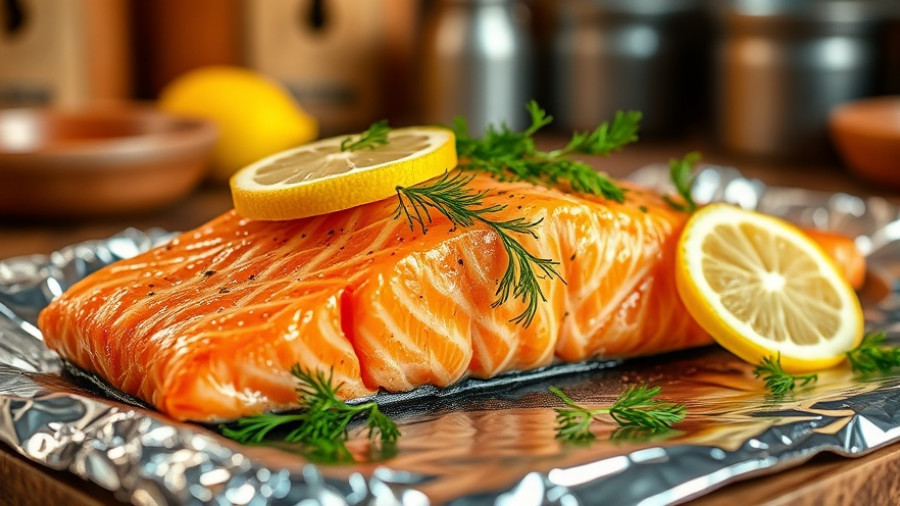
Unlock the Secrets of Flaky Oven-Baked Salmon
Salmon is more than just a dinner option—it's a delicious pact of health benefits and culinary delight. For those keen on incorporating healthier meals into their daily lives, learning how to cook flaky oven-baked salmon could be a game changer. But what sets this recipe apart? It all boils down to technique.
Why Foil-Cooking Reigns Supreme
Imagine biting into a perfectly cooked piece of salmon: the flesh flakes effortlessly, bursting with moisture and flavor. That’s the magic of cooking salmon in foil. Wrapping salmon in foil creates a quick-steam cooking environment, locking in moisture, and flavors, and ensuring every bite remains tender and juicy. With uncomplicated preparation, this method is ideal for busy adults who appreciate satisfying yet simple meals.
Choosing the Right Salmon
The first step to salmon perfection is selecting the right fish. Not all salmon is created equal—salmon species are defined by their fat content, which is essential for achieving that moist texture. King, Atlantic, and Sockeye salmon are particularly high in fat, providing a luscious experience. Always go for fresh fish with a bright color and firm texture, as this ensures quality.
Marinating for Maximum Flavor
While cooking techniques lay the groundwork for the final dish, marination is where flavor depth starts. A quick 15-30 minutes of marinade (citrus-based or herb-infused) introduces necessary seasonings which penetrate the fish, enhancing the overall profile. Remember, though, not to over-marinate as the acid can inadvertently cook the fish.
Take Your Cooking a Step Further: Broiling
After baking, consider broiling your salmon for a couple of minutes. This takes it from good to gourmet, adding a slight caramelization on top and amplifying flavors even further. It’s an easy way to elevate a simple dish while enhancing its appeal for special occasions.
Common Salmon-Cooking Mistakes and How to Avoid Them
Despite its reputation as an easy option, mishaps in salmon cooking are more common than you think. Overcooking leads to dry, unappetizing results. Ideally, aim for 145ºF as your finishing temperature. Also, use a thermometer for accurate results—trust your senses to know when the fish is perfectly flaky and ready to plate.
Delicious Pairings to Complement Your Salmon
Once you have perfected your salmon, consider what sides can accentuate your meal. The culinary world is filled with options, from light salads to hearty grains. Quinoa salads, steamed asparagus, or even a citrus salad make excellent accompaniments that both enhance flavors and balance the nutritional profile of your meal.
Take Action for Your Health Today!
Cooking salmon at home not only opens the door to a healthier lifestyle but also enriches your culinary skills. Why not try your hand at this easy foil-baked salmon recipe tonight? Your taste buds and body will certainly thank you!


Write A Comment